When New York City temperatures soar during the summer months, homeowners face a critical decision about how to cool their homes. Additionally, New York recently passed legislation forcing multi-unit property owners to install AC in all units by 2030. The choice between mini-split vs central air conditioning systems involves weighing upfront costs, operating expenses, and efficiency ratings, factors that directly impact both comfort and monthly utility bills in the city’s dense urban environment.
This comparison examines installation costs, energy efficiency metrics, and practical considerations specific to NYC properties to help you determine which cooling solution delivers the best value for your situation.
Installation Cost Comparison
The upfront investment differs significantly between these two cooling systems, particularly in NYC, where space constraints and building codes complicate installation projects.
| System Type | NYC Installation Cost Range | Best For |
| Mini Split (Single Zone) | $2,000 – $5,000 | Individual rooms, apartments without ductwork |
| Mini Split (Multi-Zone) | $4,000 – $12,000 | Multiple rooms, zone control |
| Central AC | $4,900 – $10,000 | Homes with existing ductwork, whole-house cooling |
Source: Angi NYC AC replacement data
Mini split systems in NYC typically range from $2,000 to $12,000, depending on the number of zones and placement requirements. Central air replacement costs in New York average $7,249, but this assumes that the existing ductwork is in good condition. Adding ductwork to accommodate central AC can significantly raise total costs compared to ductless alternatives.
For NYC apartments and brownstones without ductwork, mini-splits often cost less upfront because they eliminate the need for expensive ductwork installation, which can run into thousands of dollars.
Energy Efficiency & Operating Costs
The efficiency gap between these systems translates directly to summer cooling bills, a crucial consideration for NYC residents facing high electricity rates.
| Efficiency Metric | Mini Split Systems | Central Air Systems |
| SEER Rating | 20-40 | 14-18 |
| Energy Loss | Minimal (no ducts) | 20-30% (duct leakage) |
| Average Monthly Operating Cost | $60-$120 | $100-$180 |
Sources: Jacksonville One Hour,Indoor Temp comparison
Mini splits can achieve SEER ratings exceeding 20-40 by eliminating duct energy loss, while central air systems typically rate between 15-20 SEER. This efficiency advantage stems from mini splits’ inverter technology and variable-speed compressors that adjust output based on cooling demand rather than cycling on and off.
The ductwork in central air systems loses 20-30% of cooled air through leaks and poor insulation, a particular problem in older NYC buildings. Mini splits avoid this entirely by delivering conditioned air directly into living spaces.
Power consumption differences are substantial: a 12,000-18,000 BTU central air conditioner draws 3,000-3,500 watts while a comparable mini split pulls just 800-2,000 watts. Over a NYC summer, this translates to 30-40% lower cooling costs with mini splits.
Mini-Split vs Central Air: NYC-Specific Pros & Cons
New York City’s unique housing stock and regulations create distinct advantages and challenges for each system type.
| Mini Split Systems | Central Air Systems |
| Pros: | Pros: |
| ✓ No ductwork required; ideal for older NYC buildings | ✓ Works seamlessly with existing ductwork |
| ✓ Compact outdoor units fit tight spaces | ✓ Provides consistent whole-home cooling |
| ✓ Zone control reduces energy waste | ✓ Hidden indoor components maintain aesthetics |
| ✓ Often permitted where window units aren’t | ✓ Single thermostat for simple operation |
| ✓ Easier roof mounting installation | ✓ Familiar system for most homeowners |
| Cons: | Cons: |
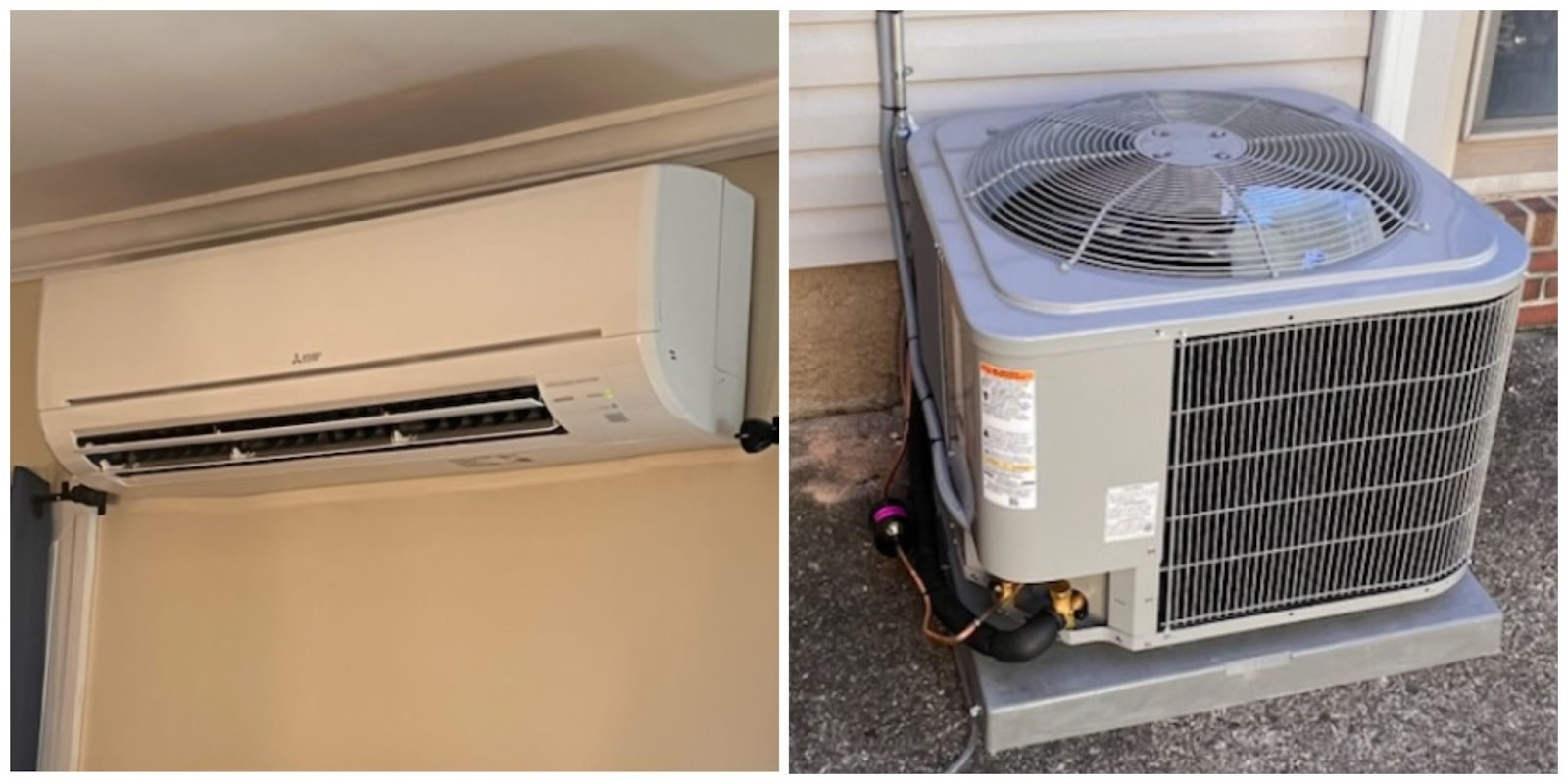
| ✗ Visible indoor wall units | ✗ Requires expensive ductwork installation if not present |
| ✗ Multiple indoor units needed for whole-home cooling | ✗ 20-30% energy loss through duct leakage |
| ✗ Some co-op/condo boards may restrict installation | ✗ A larger outdoor unit requires more space |
| ✗ Requires individual unit maintenance | ✗ Higher monthly operating costs |
In NYC’s older buildings and apartments, many properties lack ductwork entirely. In these situations, mini-splits are the practical choice over installing new ductwork that disrupts walls and ceilings.
Building accessibility factors also affect costs. NYC restrictions on street-facing window units sometimes require roof-mounted outdoor units, increasing installation complexity and labor costs for both system types. However, mini splits’ smaller condensers typically prove easier to position.
Which System Makes Sense for NYC Homeowners?
The answer depends on your property’s existing infrastructure and cooling needs:
Choose a mini-split if:
- Your property lacks ductwork (most NYC apartments and older buildings)
- You want zone control to cool specific rooms
- Energy efficiency and lower operating costs are priorities
- Space constraints limit outdoor unit placement
Choose central AC if:
- Your home has existing ductwork in good condition
- You need consistent whole-home cooling
- Upfront cost is your primary concern
- Your property has adequate outdoor space for equipment
For many NYC properties, mini splits offer the most cost-effective solution when factoring in both installation and long-term operating expenses. The 30-40% reduction in cooling costs can offset higher upfront investments within 3-5 years, particularly in NYC’s expensive electricity market.
Keep Your Home Comfortable Year-Round
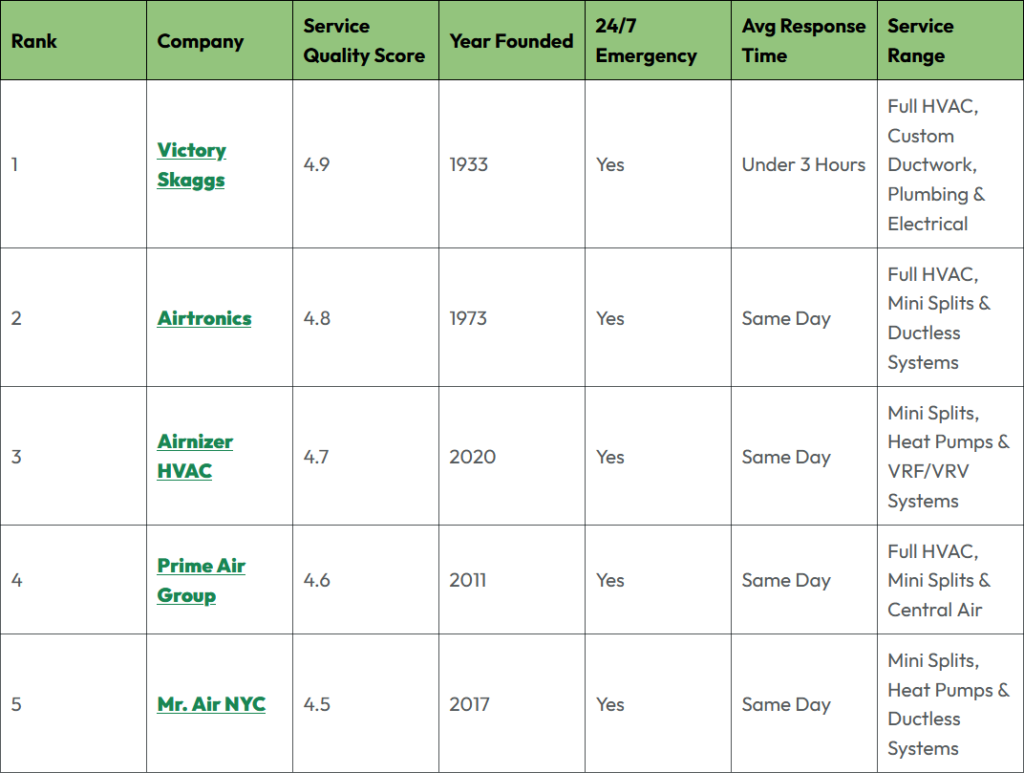
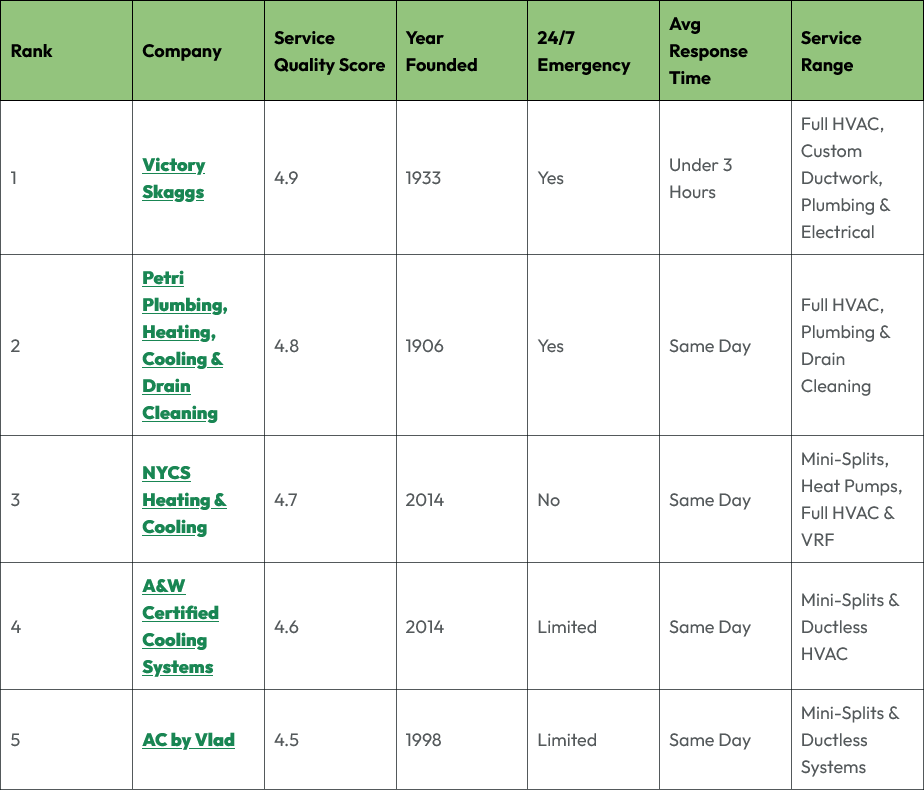
Whether you choose mini split or central air for your NYC property, Victory Skaggs provides expert HVAC installation and service throughout Manhattan, Queens, Brooklyn, the Bronx, and Nassau County. Our experienced technicians can assess your specific needs and recommend the most efficient cooling solution for your space. Contact us today to schedule a free consultation to compare mini-split vs central air and get your home ready for summer comfort.