Your boiler does a lot of heavy lifting to keep your home warm and comfortable throughout the cold season (and even longer if you live in the northern US). Regular maintenance can keep your boiler running smoothly, extend its lifespan, and prevent costly emergency breakdowns during the seasons you need it most.
This guide provides homeowners with a comprehensive boiler maintenance checklist that explains what you can do yourself and when you need a professional.
In this guide, you’ll discover:
- Essential monthly boiler maintenance checklist every homeowner can handle
- Professional maintenance requirements and safety inspections
- Warning signs that require immediate professional attention
- Other ways to extend boiler life
- A complete seasonal maintenance checklist
Monthly Boiler Maintenance Checklist
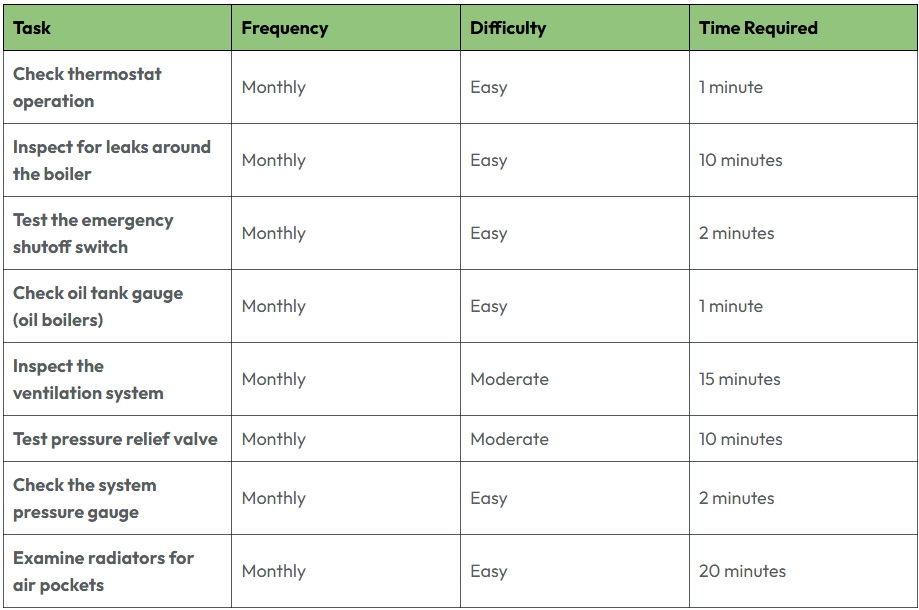
Start your boiler maintenance checklist with these basic safety inspections that take less than 30 minutes to complete:
| Task | Frequency | Difficulty | Time Required |
| Check thermostat operation | Monthly | Easy | 1 minute |
| Inspect for leaks around the boiler | Monthly | Easy | 10 minutes |
| Test the emergency shutoff switch | Monthly | Easy | 2 minutes |
| Check oil tank gauge (oil boilers) | Monthly | Easy | 1 minute |
| Inspect the ventilation system | Monthly | Moderate | 15 minutes |
| Test pressure relief valve | Monthly | Moderate | 10 minutes |
| Check the system pressure gauge | Monthly | Easy | 2 minutes |
| Examine radiators for air pockets | Monthly | Easy | 20 minutes |
Check Thermostat Operation
To test your thermostat’s heating operation, simply find a time when your home is at the listed temperature and the boiler is no longer running. Then, turn your thermostat up a few degrees and check if the boiler starts up within a minute.
Check the Emergency Shutoff Switch
Test your emergency shutoff switch monthly by making sure it stops the boiler immediately when you flip it. This red switch, typically located near the boiler or at the top of the basement stairs, must function properly for safety.
Inspect for Water Leaks
Walk around your boiler and look for water puddles, rust stains, or mineral deposits. Small leaks can indicate failing gaskets or connections that need professional attention before they cause major damage to your heating system (and your home).
Monitor the System Pressure Gauge
Your pressure gauge should read between 12 and 15 PSI when the system is cold. Pressure below 12 PSI indicates water loss, while pressure above 30 PSI suggests relief valve problems.
| Boiler Pressure Guidelines | |||
| System Type | Normal Cold Pressure | Maximum Safe Pressure | Action Required |
| Hot Water | 12-15 PSI | 30 PSI | Monitor weekly |
| Steam | 0-2 PSI | 15 PSI | Check daily during heating season |
| Combination | 12-15 PSI | 30 PSI | Monthly inspection recommended |
Check the Radiator for Air Pockets
Radiators can trap air over time, keeping the fluid inside from being able to circulate well and providing consistent heat. Check the radiator for trapped air by performing the following steps:
- Turn your heating system on: Get your heating system running to ensure your radiator is active.
- Listen for bubbling: Radiators with air bubbles trapped inside may make a gurgling noise that can be heard when near the radiator.
- Feel the radiator for cold spots: Trapped air will create a cold spot where heating fluid isn’t able to flow, and a radiator that is warm near the bottom but cold near the top usually has trapped air. Touch the radiator to find cold spots.
- Watch for slow heating: Your radiator and the pipes around it should start to warm up pretty soon after the heating system kicks on. If your radiator isn’t warming up in a matter of a few minutes, or the pipes are warm and the radiator isn’t, it could be because of trapped air.
If you discover signs of an air block in your radiator, you may need to bleed it if you’re comfortable doing so at home. If not, call a professional heating repair team.
Periodic Professional Maintenance
It is recommended to get professional boiler service periodically, about every 1,500-2,000 gallons of fuel, usually before the heating season begins. Licensed technicians perform critical maintenance tasks beyond homeowner capabilities, which can keep your system running much longer and more efficiently:
- Professional Cleaning and Tune-Up: Annual cleaning removes soot buildup that reduces efficiency by up to 15%. Technicians also calibrate controls, test safety devices, and adjust combustion for optimal performance.
- Combustion Analysis: Professional technicians measure combustion efficiency, carbon monoxide levels, and draft pressure. These tests ensure safe operation and identify problems before they cause breakdowns.
- Heat Exchanger Inspection: Cracked heat exchangers can leak dangerous carbon monoxide into your home. Only trained professionals can safely inspect and test the integrity of the heat exchanger.
The frequency with which you should get inspections is different depending on the age and type of heating system you use. For much older systems (10+ years old), it is usually smart to get an annual inspection. More modern systems can likely go a bit longer without an inspection, so going 1.5-2 years between inspections is usually not a problem.
Warning Signs Requiring Immediate Attention
Certain symptoms indicate serious boiler problems that need professional diagnosis and repair:
Emergency Situations Requiring Immediate Service
| Warning Sign | Potential Cause | Immediate Action |
| Gas/oil odors | Fuel leak | Shut off the fuel supply, ventilate the area, and call a professional |
| No heat production | System failure | Check thermostat, power, and fuel supply (call a professional if no simple cause is found) |
| Water leaks | Component failure | Shut off the water supply, call for service |
| Carbon monoxide alarm | Combustion problem | Evacuate the home, shut off the boiler, and call emergency service |
Taking the proper steps after noticing these signs can be the key to keeping a working heating system and a safe home.
Optimize Your Heating with Quality Fuel and Professional Service
The fuel quality and service provider you choose can significantly impact boiler maintenance requirements, system longevity, and heating performance.
Premium Heating Oil
Quality heating oil burns cleaner, produces less soot, and extends the time between cleanings. Biofuel blends reduce environmental impact while maintaining excellent performance in all boiler types.
24/7 Emergency Service Availability
Boiler emergencies happen at inconvenient times. Choose service providers who offer around-the-clock emergency service to prevent extended heating outages during cold weather.
Professional Expertise Matters
Licensed technicians have specialized training, proper tools, and manufacturer certifications needed for safe and effective boiler maintenance and repairs.
Your Complete Seasonal Boiler Maintenance Checklist
| ✔ | Before Heating Season (September-October): |
| Schedule a professional cleaning and tune-up (Not every year, every 1.5-2k gallons) | |
| Test thermostat operation and replace batteries | |
| Check and replace air filters | |
| Inspect ductwork for leaks or damage | |
| Test emergency shutoff switches | |
| Fill the oil tank and check the fuel quality | |
| Bleed radiators to remove air pockets | |
| Test pressure relief valve operation | |
| ✔ | During Heating Season (November-March): |
| Schedule a professional cleaning and tune-up | |
| Test thermostat operation and replace batteries | |
| Check and replace air filters | |
| Inspect ductwork for leaks or damage | |
| Test emergency shutoff switches | |
| Fill the oil tank and check the fuel quality | |
| Bleed radiators to remove air pockets | |
| Test the pressure relief valve operation | |
| ✔ | After Heating Season (April-August): |
| Schedule off-season maintenance if needed | |
| Check for winter damage to outdoor components | |
| Plan summer maintenance projects | |
| Consider efficiency upgrades or replacements |
Professional boiler maintenance prevents most emergency breakdowns and significantly extends equipment life. Regular care will keep your family comfortable while helping to control heating costs throughout the winter season.
Get Expert Help With Your Boiler Maintenance Checklist
We’ve helped thousands of homeowners navigate heating oil delivery, boiler maintenance, and heating system upgrades. Our technicians are available 24/7, 365 days a year, so you’re never left without expert support when you need it most. Whether you’re dealing with an aging oil boiler, looking to add air conditioning, or simply want to reduce your heating costs, we can assess your home’s specific needs and recommend the most cost-effective solution.
Contact Skaggs-Walsh today for a free consultation or assistance with anything on your boiler maintenance checklist.