New York City summers hit hard, and from June through September, temperatures regularly climb into the 90s. With new city laws requiring landlords to maintain cooling systems capable of keeping apartments at 78°F or below, choosing the right cooling system matters more than ever.
If you’re weighing a mini split vs window unit, you’re comparing two fundamentally different approaches to beating the heat. Window units offer quick, affordable relief for renters and budget-conscious homeowners. Mini splits deliver superior efficiency and year-round heating, but require professional installation and a higher upfront investment.
This comparison breaks down the efficiency (measured via SEER2 Rating), cost, and practical differences between these two cooling systems so you can make the right choice for your NYC home.
Mini Split vs Window Unit: Efficiency & Cost Comparison 2026
The table below compares key metrics for cooling a typical 300-square-foot NYC bedroom through an average summer season:
| Factor | Window Unit | Mini Split |
| Efficiency & Performance | ||
| SEER2 Efficiency Rating | 8-12 | 19-28+ |
| Energy Use (per season) | 1,000-1,200 kWh | 600-700 kWh |
| Noise Level | 50-60 dB | 19-40 dB |
| Lifespan | 8-10 years | 15-20 years |
| Heating Capability | No (or electric resistance) | Yes (heat pump) |
| Cost | ||
| Upfront Cost | $200-$700 | $2,000-$10,000 |
| Installation Cost | $0-$200 (DIY) | $500-$2,000 (professional) |
| Operating Cost (NYC rates) | $200-$240/season | $120-$140/season |
Table Sources: The Furnace Outlet, Angi, EnergySage, The Furnace Outlet, The Furnace Outlet(2), Consumer Reports
Key Takeaways:
- Mini splits use 30-40% less energy than comparable window units due to inverter technology
- Window units cost 10 times less upfront, but consume significantly more electricity over their shorter lifespan
- In New York, single-zone mini split installation averages $2,300-$16,100, while window units require minimal to no installation costs
How Mini Splits Achieve Superior Efficiency
Mini splits dominate the efficiency battle because of their inverter-driven compressors. Unlike window units that cycle on and off at full power, mini splits adjust their output continuously, running at lower speeds for longer periods. This steady operation eliminates energy-hungry restarts and maintains consistent temperatures.
Because mini splits operate without ductwork, they avoid the 20-30% energy loss common in traditional central air systems. Their zoned design means you only cool the rooms you’re using, further cutting waste.
Modern mini splits routinely achieve SEER2 ratings of 19 or higher, with premium models exceeding 28 SEER2. Window units, even ENERGY STAR-certified models, typically range from 8-12 SEER2. The SEER2 standard, implemented in January 2023, uses more rigorous testing conditions that better reflect real-world performance.
Window Unit Limitations
Most window units rely on fixed-speed compressors that run at full blast, then shut off completely once the target temperature is reached. This on-off cycling wastes energy and creates temperature swings that reduce comfort.
Window AC efficiency ratings typically range from 8-12 SEER2, meaning they convert electricity to cooling far less effectively than mini splits. The constant cycling also stresses components, contributing to theirshorter 8-10 year lifespan compared to a mini split’s 15-20 years.
Some newer “smart” window units incorporate inverter technology and achieve higher efficiency ratings, but they still cool only one room and lack the heating capabilities of mini splits.
Upfront Investment vs Long-Term Savings
Upfront Costs
For New Yorkers, the upfront costs of each type of cooling can vary, but generally fall within the following ranges:
Window Units:
- Purchase price: $130-$530 per unit
- Installation: DIY-friendly for most (or $100-$200 for professional help)
- Total first-year cost: $200-$700
Mini Splits:
- Equipment cost: $1,500-$6,000 for single-zone systems
- Professional installation: $500-$2,000 (required in most cases)
- Total first-year cost: $2,000-$10,000
The Long-Term Cost Reality
That 10x price difference shrinks over time. Here’s how the costs compare over a typical NYC system lifespan:
| Cost Factor | Window Unit | Mini Split |
| Year 1 Total Cost | $400-$900 | $2,000-$10,000 |
| Annual Cooling Cost | $200-$240 | $120-$140 |
| Annual Heating Cost | $600-$800 (separate system) | $0 (included) |
| Total Annual Operating Cost | $800-$1,040 | $120-$140 |
| Cost Per Year of Life | $1,050-$1,410 (8-10 yr lifespan) | $213-$760 (15-20 yr lifespan) |
| 10-Year Total Cost | $8,400-$11,300 | $3,200-$11,400 |
Key Savings:
- Mini splits reduce summer cooling bills by 25-40%
- Dual heating function eliminates separate winter heating costs ($600-$800/year savings)
- The break-even point based on these numbers is 3-5 years for equipment costs alone
- True payback period is 5-8 years when factoring in heating elimination
- Over 15 years, a mini split can save $4,000-$8,000 compared to running window units plus separate heating
In NYC’s climate, with 4-5 months each of cooling and heating seasons, the energy savings compound quickly, especially when you factor in the elimination of heating costs. When you factor in the significantly better cooling performance, it makes a pretty solid value case for mini-splits if your initial budget can accommodate them.
Mini Split vs Window Unit: Performance Considerations
New York City’s hot, humid summers make cooling efficiency just as important as cost when comparing mini split vs window units. During July and August, when outdoor temperatures regularly reach 90°F, and humidity is high, mini splits excel at maintaining steady temperatures while removing moisture from the air.
Window units struggle in extreme heat because their fixed-speed compressors either blast cold air or shut off completely, creating temperature swings that feel uncomfortable. Their placement in windows also allows more outside heat and humidity to leak in around the unit’s mounting.
For NYC’s winters, mini splits offer a significant advantage. Modern heat pump mini splits can heat efficiently even when outdoor temperatures drop to 0°F or below, eliminating the need for separate heating systems and saving money year-round.
Noise, Comfort, and Quality of Life
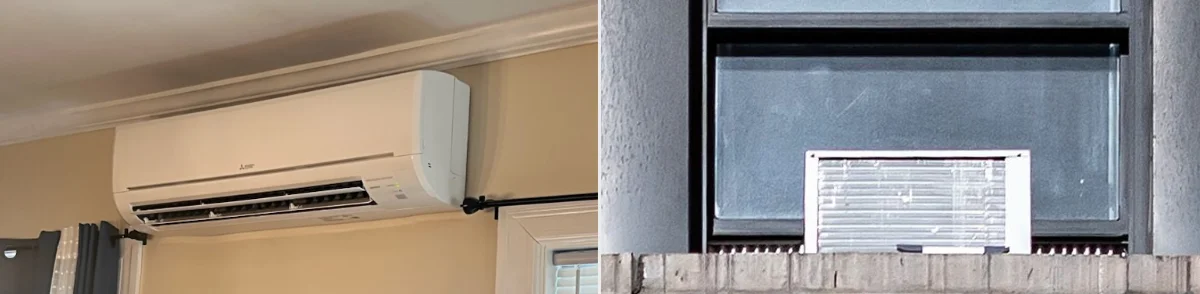
Beyond the numbers, daily comfort matters.Mini splits operate at library-quiet levels (19-40 dB), with the loudest components housed in the outdoor condenser several feet away from your living space.Window units sit directly in your room, generating 50-60 decibels of constant noise plus jarring startup sounds every time they cycle on.
Window units also block natural light and views, and in many NYC buildings, they must be removed and reinstalled seasonally. Mini splits mount high on walls or ceilings, preserving window functionality while providing more even air distribution throughout the room.
When to Choose: Mini Split vs Window Unit
Choose a Window Unit If You:
- Rent your apartment and can’t make permanent modifications
- Need cooling for just one room or occasional use
- Have a tight budget with less than $1,000 to spend
- Move frequently and want a portable solution
- Live in a space for a short term (1-3 years)
Choose a Mini Split If You:
- Own your home or have landlord approval for permanent installation
- Cool multiple rooms or want whole-home comfort
- Need heating and cooling from a single efficient system
- Value quiet operation (mini splits run 20-30 decibels quieter)
- Plan to stay 5+ years to recoup the installation investment
- Want to increase home value with a permanent upgrade
Get Expert Help With Your Cooling System
Whether you’re upgrading to a mini split or optimizing your current window unit setup, professional guidance ensures you choose the right system for your space and budget.
Skaggs-Walsh’s experienced HVAC professionals serve all five boroughs and can help you navigate NYC’s unique installation requirements, building codes, and available rebates. We specialize in mini split installations and can assess whether your electrical system needs upgrades to support your new cooling system.
Contact us today to schedule a free mini split vs window unit consultation and get a customized quote for your home.