ntly as possible. Understanding what affects heating oil usage is the first step in managing your energy costs and ensuring your home stays warm all winter. Whether you’re a new homeowner or just looking to optimize your fuel consumption, knowing the key factors that influence how much oil your home burns can help you budget more effectively and make informed decisions about your heating system.
Several variables directly impact your annual heating oil consumption, from obvious factors like outside temperature to less apparent considerations like oil quality and hot water usage patterns. Let’s explore the primary elements that determine how much fuel your heating system requires.
Primary Factors Affecting Heating Oil Usage
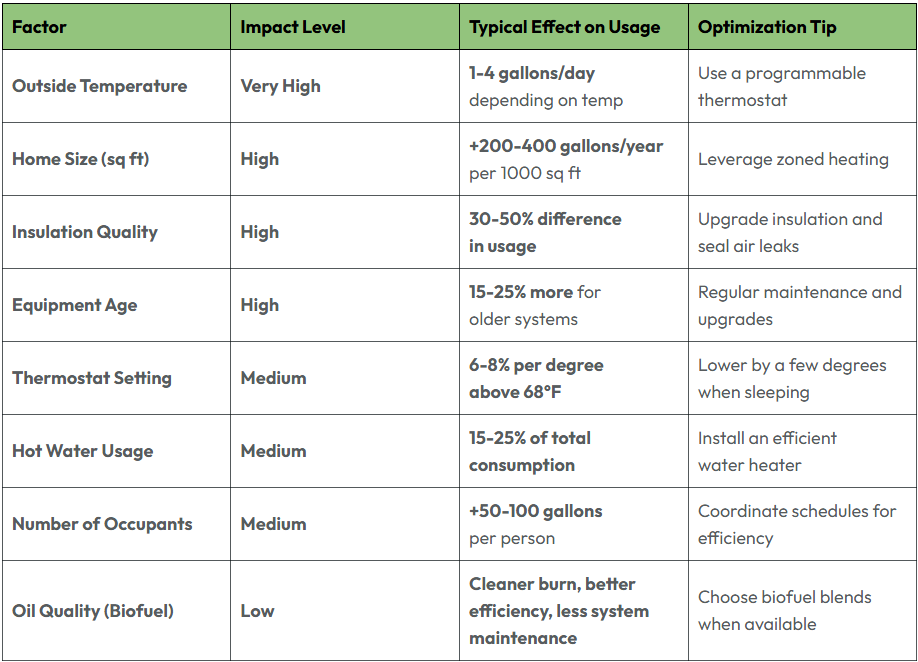
| Factor | Impact Level | Typical Effect on Usage | Optimization Tip |
| Outside Temperature | Very High | 1-4 gallons/day depending on temp | Use a programmable thermostat |
| Home Size (sq ft) | High | +200-400 gallons/year per 1000 sq ft | Leverage zoned heating |
| Insulation Quality | High | 30-50% difference in usage | Upgrade insulation and seal air leaks |
| Equipment Age | High | 15-25% more for older systems | Regular maintenance and upgrades |
| Thermostat Setting | Medium | 6-8% per degree above 68°F | Lower by a few degrees when sleeping |
| Hot Water Usage | Medium | 15-25% of total consumption | Install an efficient water heater |
| Number of Occupants | Medium | +50-100 gallons per person | Coordinate schedules for efficiency |
| Oil Quality (Biofuel) | Low | Cleaner burn, better efficiency, less system maintenance | Choose biofuel blends when available |
Outside Temperature
The biggest impact on your heating oil usage is outdoor temperature. On a mild day with temperatures around 50°F, your home might use less than one gallon of oil. However, when temperatures drop to 30°F, daily consumption typically increases to about 2 gallons. During extreme cold snaps with temperatures below 10°F, your system could easily burn through 3-4 gallons daily, making winter an extremely expensive season for those in snowy areas.
This temperature sensitivity explains why heating oil usage varies so dramatically between seasons and why your fuel bills spike during really rough winters. The colder it gets outside, the harder your heating system must work to keep your home comfortable.
| Solution |
| There isn’t much you can do about the outdoor temperature. That being said, making some of the improvements we cover here will have an even bigger financial impact, making the investment far more worthwhile if you live in areas with very cold weather. |
Home Size and Layout
Another significant and uncontrollable factor affecting your heating oil consumption is the size and layout of your home. A standard 2,000-square-foot home typically uses between 800 and 1,200 gallons of heating oil annually, while larger homes require proportionally more fuel.
The following aspects of your home can result in extreme differences in heating oil use:
- Total square footage: More space requires more energy to heat
- Ceiling height: High ceilings allow warm air to rise away from living spaces
- Open floor plans: Can distribute heat more efficiently than segmented rooms
- Number of floors: Multi-story homes may have uneven heating distribution
| Solution |
| Like with outdoor temperature, you can’t really control the size of your home once you’re living in it. However, having a bigger home also means there is more to gain when you make other changes to save money, so it’s not all bad news! |
Insulation Quality
Proper insulation acts as a barrier, preventing warm air from leaving your home and cold air from getting in. Compared to poorly insulated properties, well-insulated homes can reduce heating oil usage by 30-50%.
Key insulation areas that impact fuel consumption:
- Attic insulation: Prevents heat loss through the roof
- Wall insulation: Maintains consistent indoor temperatures
- Basement and crawl space insulation: Reduces ground-level heat loss
- Window quality: Double-pane windows significantly improve efficiency
Homes with insufficient insulation, drafty single-pane windows, or older exterior doors with damaged weather stripping lose substantial heat, leading to increased oil consumption and higher energy costs.
| Solution |
| Consider either hiring a professional or looking up some DIY ways to improve the insulation in your home. While it can be expensive and difficult to tackle all of these at once, dealing with them one at a time can still yield good results, even if it isn’t the entire 30-50% you’d get from a total home insulation project. You can also optimize costs and effort by DIYing some easier items (door weather stripping or attic insulation) and leaving the trickier ones with more aesthetic impact (wall insulation and window installation) to the pros. |
Equipment Age and Efficiency Ratings
The age and efficiency of your heating system dramatically affect fuel consumption. Older oil furnaces or boilers may operate at only 60-70% efficiency, while modern high-efficiency systems can achieve 85-90% efficiency ratings.
Equipment factors affecting heating oil usage include:
- AFUE rating: Higher ratings mean better fuel-to-heat conversion
- System maintenance: Well-maintained equipment runs more efficiently
- Proper sizing: Oversized systems cycle on and off frequently, wasting fuel
- Technology upgrades: Modern controls and components optimize performance
Even if your existing system was labeled “high-efficiency” when it was new, the performance loss from age and lack of maintenance can be surprisingly large.
| Solution |
| Depending on its age, there are a few ways to improve your system’s efficiency. If your system is less than a decade old, simply make sure you get your system tested and maintained annually to ensure proper operation. If your system is over a decade old and isn’t a modern high-efficiency system, consider contacting a trusted HVAC company to consult with you on a replacement. |
Thermostat Settings and Usage Patterns
Your thermostat settings and heating patterns significantly influence oil consumption. Each degree you raise your thermostat increases heating oil usage by approximately 6-8%.
| Solution |
| Setting your thermostat to 68°F during the day and lowering it by a few degrees at night or when away can reduce annual fuel consumption by 5-15%. Using programmable thermostats to adjust temperatures automatically can make this much easier. You can also keep your temperature more consistent throughout the day, which is another thing you can do at home to reduce oil usage. Another more comprehensive option is to use a zoned heating system, which allows you to focus heating on the areas of your home that actually stay occupied. |
Hot Water Usage
Hot water heating typically accounts for 15-25% of total heating oil consumption in homes with oil-fired water heaters. Families with high hot water usage, frequent showers, and large loads of laundry and dishes will see higher fuel bills.
Hot water efficiency factors include:
- Water heater age and efficiency rating
- Tank insulation quality
- Hot water temperature settings
- Usage patterns and conservation practices
| Solution |
| Older water heaters don’t last nearly as long as home heating oil systems, so replacement is a lot more likely to be needed if you’re noticing serious efficiency issues with your water heater. If your water heater is working properly, consider using cold water for more of your laundry loads, shortening your showers, and using other hot water conservation strategies to reduce oil use for water heating. |
Number of Household Members
Each additional person in your home typically adds 50-100 gallons to your annual heating oil usage. This increase comes from several factors: more hot water usage, higher thermostat settings for comfort, and increased occupancy hours requiring consistent heating.
| Solution |
| This one is firmly back in the “there’s not much you can do about it” territory. With that said, ensuring every member of your household does their part, like conserving hot water, keeping the thermostat at a consistent temperature throughout the day, and using zoned heating (if you have it) to avoid heating unoccupied areas, can mitigate the impact on your fuel consumption. |
Oil Quality and Biofuel Benefits
The quality of your heating oil affects both efficiency and equipment performance. High-quality heating oil, including biofuel blends like those offered by Skaggs-Walsh, provides several advantages that can optimize your heating oil usage:
- Cleaner burning: Reduces soot buildup and improves efficiency
- Better BTU content: Bioheat has the highest BTU content of any alternative fuel
- Improved lubrication: Extends equipment life and reduces maintenance costs
- Reduced emissions: Better for both your home and the environment
Biofuel blends burn cleaner than conventional heating oil, which means your system maintains its efficiency longer throughout the heating season. While conventional heating oil may have a slightly higher BTU content, the cleaning properties of biofuel often offset this difference through improved system performance.
| Solution |
| This one is easy: Find a local fuel delivery provider with quality biofuel. |
Where to Start Optimizing Your Heating Oil Usage
Understanding what affects heating oil usage is half the battle, but not every issue is as easily (or inexpensively) solved. So, it is important to know what next steps provide the most value on a per-dollar basis. Small changes in multiple areas can lead to significant savings:
Oil Usage Optimization Quick Reference
| Optimization Strategy | Cost Level | Difficulty | Timeframe | Potential Savings |
| Immediate Actions | ||||
| Lower thermostat by 2-3 degrees | Free | Easy | Immediate | 12-24% |
| Seal air leaks around windows/doors | $20-100 | Easy | Weekend project | 5-15% |
| Schedule professional maintenance | $150-300 | Easy | 1-2 hours (Annually) | 10-20% |
| Install a programmable thermostat | $100-250 | Moderate | 1-2 hours | 8-15% |
| Long-Term Investments | ||||
| Upgrade attic insulation | $1,500-3,500 | Moderate | 1-2 days | 20-30% |
| Replace old heating equipment | $3,000-8,000 | Professional | 1-2 days | 25-40% |
| Install zone heating controls | $2,000-5,000 | Professional | 1 day | 15-25% |
| Switch to premium biofuel blends | $0.05-0.15/gallon | Easy | Next delivery | 5-10% |
| Upgrade windows to double-pane | $400-800/window | Professional | 1 day/window | 10-20% |
Use this reference table to make an educated decision on what projects you want to tackle first.
Reduce Your Heating Oil Usage with Skaggs-Walsh
The key to effectively managing heating oil usage lies in addressing multiple factors simultaneously. Some of these projects, such as improving your home’s insulation, maintaining efficient equipment, and using high-quality fuel, will require outside help from a quality heating oil and HVAC company.
Skaggs-Walsh provides oil delivery, boiler maintenance, and installation services that NY customers can count on 24/7. We offer the best equipment and friendly, on-time automatic fuel delivery. We respect you, your home, and your time, and we strive to make sure that your problems get solved in a way that gets you the best value for your money.
Ready to optimize your heating oil usage? Contact Skaggs-Walsh today for expert advice on equipment upgrades, maintenance services, and premium biofuel delivery that can help reduce your heating oil usage.