Heating oil costs a lot of money, and many New York homeowners want to cut their heating bills. The good news is that you can save money without being cold all winter, but most homeowners aren’t sure where to start.
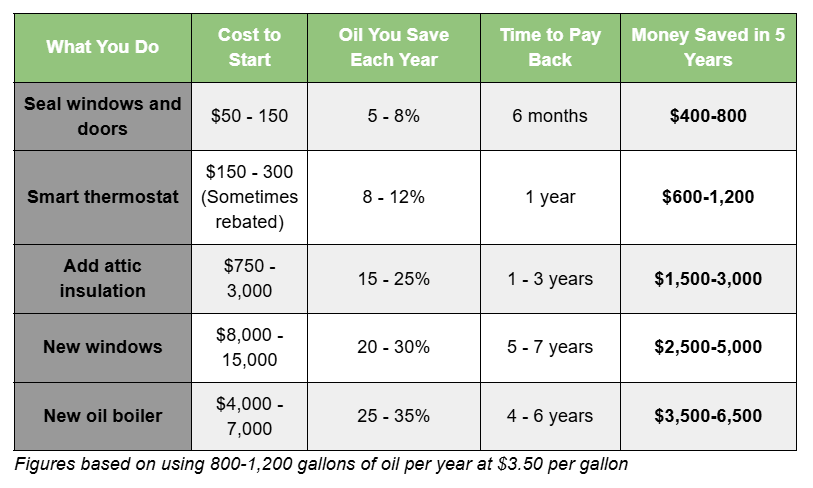
To help, we’ve put together this guide to show you that you don’t need to replace your whole heating system. Small changes can cut your oil use by 15% to 30%, leading to big savings on your heating bills.
Here’s what we’ll show you:
- Home fixes that save money by keeping warm air inside
- Simple heating maintenance tips to use less oil
- Smart ways to control your heat for more efficient heating
- Better oil options that burn more efficiently and keep your system healthy
- When to get new equipment for the best savings
- Small issues that fall outside of these categories can cause heat loss
Let’s dive into each to help you understand how to save money on heating oil.
Stop Heat from Escaping Your Home
The best way to save on heating oil is to keep warm air inside. Most homes lose up to 40% of their heat through cracks and gaps, so adding weather stripping, insulation, or better windows can save you quite a bit of money.
Easy fixes you can do yourself:
- Put weather strips around windows and doors
- Fill gaps around outlets and light switches
- Use caulk to seal cracks around windows
- Put door sweeps under outside doors
Insulation
The insulation in your walls, attic, and crawlspace significantly impacts your home heating costs, as it keeps warm air from escaping your walls, ceiling, and floor. While newer homes likely have adequate insulation, older homes in more historic neighborhoods (like our home state of New York) may have insulation that isn’t effective anymore due to pests, moisture, or other factors.
If so, it may be worthwhile to get new insulation. You can do this yourself or hire a professional, though some more complex homes will be difficult to DIY. The attic is the easiest to do yourself, while the walls and crawlspace can be more difficult.
Where to add more insulation:
- Your attic needs at least 12-15 inches of insulation
- Walls may need more insulation, too
- Don’t forget the basement and/or crawl spaces
| Where to Add Insulation | How Much | What It Costs | Oil You Save |
| Attic | 12-15 inches thick | $750 – 2,500 | 15-20% |
| Walls | Fill empty spaces | $3,000 – 6,000 | 10-15% |
| Basement | Cover walls | $1,000 – 2,000 | 8-12% |
A home energy check can find where you lose the most heat, which will help you fix the biggest problems first.
Windows
Older single-pane windows are notoriously bad at keeping heat in the home. Newer double-pane windows were designed with an air gap between them to better insulate the home, reducing heating energy consumption and creating a greener home with lower energy bills.
We do not recommend any DIY window installation, so plan for a window upgrade to cost between $2,500 and $5,000, depending on the size of your home and the number of windows.
Take Care of Your Heating System
A well-maintained heating system uses less oil, so regular care is the best way to keep everything working well and reduce your bill without having to buy any new equipment.
Things to do every year:
- Get a professional tune-up every 1,500-2,000 gallons of fuel (during fall if you want faster service)
- Change filters every month during the winter
- Get an inspection if you notice any increases in heating oil consumption
Other signs your system needs an inspection:
- Yellow or orange flames (should be blue)
- Black soot around the unit
- Bad smells when it runs
| What to Do | How Often | DIY Cost | Pro Cost | Oil Saved |
| Change filter | Every month | $5-15 | $25-50 | 3-5% |
| Tune-up | Every 1,500-2,000 gallons | Can’t do yourself | $150-400 | 8-15% |
| Inspection | ~Once a year | Can’t do yourself | $100-200 | 5-10% |
A well-kept system uses less oil, lasts longer, and breaks down less often. This not only saves money on heating oil, but also on repairs and equipment replacement.
Be Smart with Your Thermostat
Changing your thermostat settings can save a lot of oil. The trick is knowing when to turn it down and how to use the new tech available that can handle it for you.
Home thermostat tips:
- Turn it down a few degrees at night
- Lower it when no one is home for 8+ hours
- Get a smart thermostat to do this automatically
- Heat different rooms separately if you have a zoned heating system
Room by room tips:
- Close vents in rooms you don’t use
- Use ceiling fans to move warm air around
- Open curtains when it’s sunny
- Close curtains at night to keep more heat in
Each degree you lower saves you about 6-8% on oil. If you use 1,000 gallons a year, turning down the temperature by 3 degrees can save 150-200 gallons.
Pick Better Heating Oil
Not all heating oil works the same way. Using quality Bioheat oil can make your system heat better and use less fuel.
Why Bioheat is a better choice:
- Burns cleaner than regular oil
- Makes your equipment last longer
- Better for the environment
- You can get money back on taxes (20¢ per gallon)
Better oil costs a little more, but it often saves households money overall by improving the lifespan of heating equipment and burning more efficiently.
When to Get New Equipment
Old heating systems can waste a lot of oil as they lose efficiency over time. Modern equipment is not only more efficient out of the box than older boilers, but also resets the clock on efficiency loss, making it a huge upgrade for those who haven’t replaced theirs in a while.
Think about upgrading when:
- Your system is over 15 years old
- You spend more than $500 a year on repairs
- Some rooms are hot while others are cold
- You’re using more oil each year
Equipment Upgrade Comparison
| Current System Age | Current System Efficiency | Modern System Efficiency | Potential Heating Oil Savings |
| 10-15 years | 80-85% | 90-95% | 10-15% |
| 15-20 years | 75-80% | 90-95% | 15-25% |
| 20+ years | 65-75% | 90-95% | 25-35% |
New systems can cut your oil use by 25-35% compared to those from the 1990s or older, paying for themselves with ease over the course of a decade.
How to Save Money on Heating Oil? Fix Heat Loss Problems Fast
Here are some other small problems that can waste a lot of oil if you don’t fix them quickly.
Things to fix right away:
- Leaky hot water pipes waste oil and water
- Broken ducts let warm air escape
- Broken thermostats can make your system heat more than necessary
- Blocked vents stop air from circulating
Signs you have these issues:
- You have no heat or hot water
- You smell strong oil odors
- Your system makes strange noises
- You see oil leaking anywhere
Don’t wait to fix heating problems. Small issues can become big, expensive ones pretty quickly. If you think something is wrong with your system, call for help right away.
Get Heating Oil and Repair Services in New York with Skaggs-Walsh
Skaggs-Walsh helps customers 24 hours a day, 7 days a week. We serve Manhattan, Queens, Brooklyn, the Bronx, Nassau County, and Westchester, and can fix problems before they waste too much oil or break your heating system.
Questions about how to save money on heating oil? Call Skaggs-Walsh now to check your heating system and get tips that work for your home.